Carbon Credit Case Studies: How Indian Projects Turn Waste Into Revenue
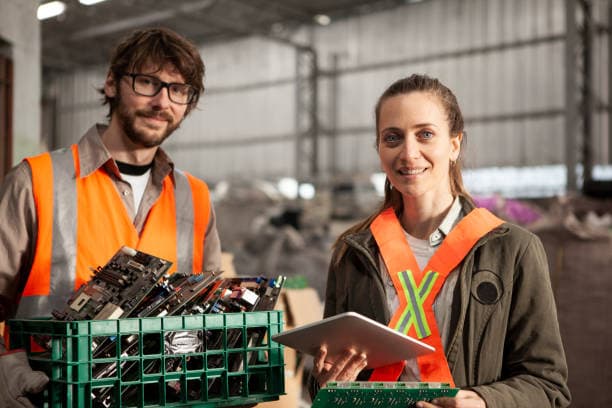
Carbon credits can feel abstract until you see them working. India — long one of the world's largest suppliers of credits under the old Clean Development Mechanism — has real, on-the-ground examples of projects that turned waste and emissions into revenue. Here are the case studies worth learning from.
*(For the underlying mechanics — credit types, MRV, and the colours of carbon — start with our pillar guide on carbon credits in the waste value chain.)*
1. Landfill gas capture — the scientifically-capped dumpsite
One of India's best-known examples is the scientific closure of a large urban dumpsite, where decades of buried waste were capped and the methane it releases was captured rather than vented. Because methane carries roughly 80 times the warming punch of CO₂ over two decades, capturing it generated substantial, verifiable emission reductions — credited under international standards. The lesson: even legacy waste, already in the ground, is a carbon asset if you can measure and capture what it emits.
2. Municipal organics → bio-CNG
Under India's SATAT initiative and the GOBARdhan programme, cities and clusters convert wet waste, agricultural residue, and cattle dung into Compressed Biogas (CBG / bio-CNG). Ventures such as Bengaluru's biogas producers have shown the model: divert organics from landfill, produce clean fuel, and earn credits from the avoided methane. Revenue stacks — fuel sales *plus* carbon credits *plus* organic fertiliser (digestate) that feeds green (soil) carbon.
3. Industrial efficiency under the compliance market
With India's Carbon Credit Trading Scheme (CCTS) now live, energy-intensive industries — cement, steel, aluminium, fertiliser — that beat their notified GHG-intensity targets earn tradable Carbon Credit Certificates (CCCs) they can sell to laggards. This turns efficiency into a balance-sheet item. (For the full picture, see where India stands on carbon credits.)
4. Recycling & EPR — the plastics angle
Recovering plastics, metals, and paper avoids the emissions of producing virgin materials. Paired with Extended Producer Responsibility (EPR) obligations, formalised recycling operations increasingly document recovery well enough to claim both plastic and carbon benefits — provided the chain of custody holds up.
What the case studies have in common
Look closely and every successful project shares one thing: proof. Landfill gas, bio-CNG, industrial efficiency, recycling — each only monetises because the underlying flows are measured, reported, and verifiable. Where projects fail or under-earn, it is almost always because the data could not survive scrutiny.
| Project type | Carbon lever | What makes or breaks it |
|---|---|---|
| Landfill gas | Captured methane | Metering + third-party verification |
| Bio-CNG / biogas | Avoided methane | Verified feedstock diversion |
| Industrial efficiency | Below-target GHG intensity | Accurate output & emissions data |
| Recycling / EPR | Avoided virgin production | Documented recovery chain |
That is exactly the layer Reclevo builds: a traceable record of every pickup, weighment, and facility handoff — the evidence a verifier needs, captured automatically as the work is done.
Frequently asked questions
Has India actually earned carbon credits from waste?
Yes. India was a major supplier under the Clean Development Mechanism, including landfill-gas and biogas projects, and now has a domestic market (CCTS) plus a voluntary offset mechanism.
Which waste projects earn the most credits?
Typically those that avoid methane — diverting organics to composting or biogas — because methane is so much more potent than CO₂.
What's the single biggest failure point?
Weak MRV. If you cannot prove, tonne by tonne, what happened to the waste, the credits get discounted or rejected.
---
The pattern is clear: India's carbon opportunity is real, and it rewards operators who can *prove* their impact. See how Reclevo makes waste traceable — and creditable — with the Reclevo platform and RwAM, or book a demo.
Written by
Reclevo Team
Climate Tech