What Is a Waste Management System? A Complete Guide for India (2026)
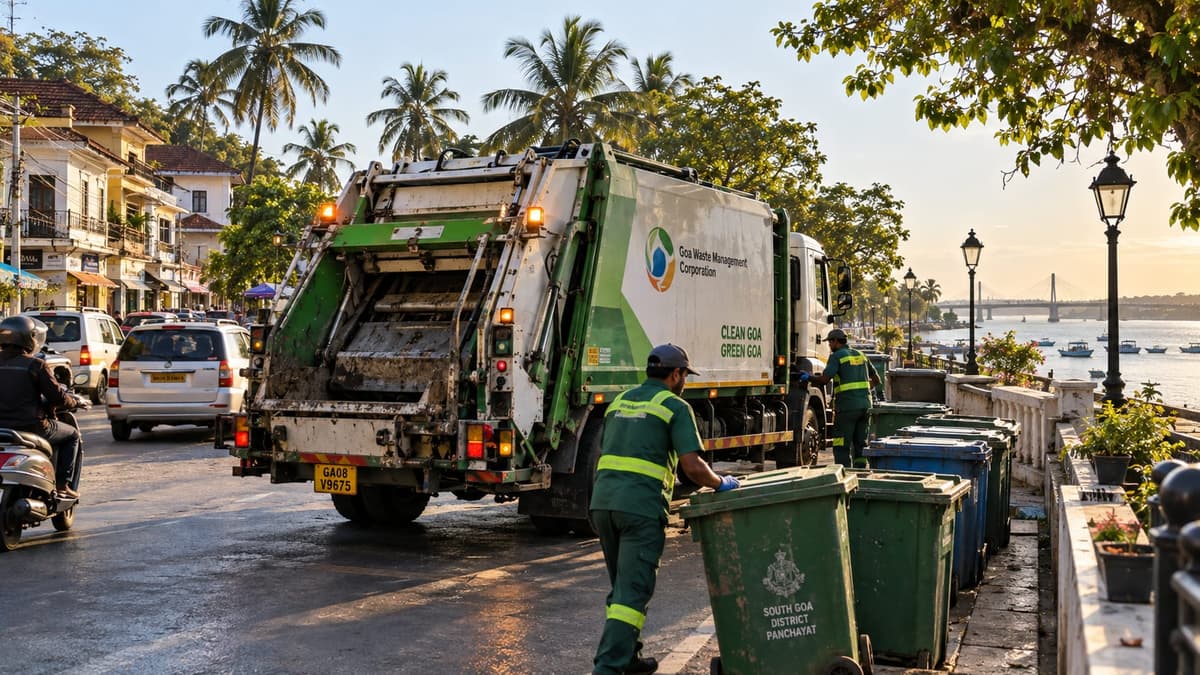
A waste management system is the coordinated set of people, processes and technology that collects, transports, treats, recovers and safely disposes of waste — while keeping a record of what happened at each step. It spans everything from the household bin and the collection vehicle to the processing facility, the compliance report filed with the regulator, and the data that ties it all together. A good system does not just move waste; it proves where the waste went.
Most people picture a waste management system as trucks and landfills. That is the visible part. The part that decides whether a city, a facility or a business actually stays compliant and efficient is the invisible layer underneath: the routes, the schedules, the weighments, the segregation checks, and the audit trail. This guide breaks down what a waste management system is, its components, the main types, how it works in India, and where software is now changing the game.
The core components of a waste management system
Every functioning waste management system — whether it serves a single ward or an entire industrial estate — is built from the same building blocks:
- Generation & segregation — waste is produced and, ideally, separated at source into wet (biodegradable), dry (recyclable) and domestic hazardous streams. Segregation quality upstream determines how much can be recovered downstream.
- Storage & collection — bins, community collection points and door-to-door pickup move waste out of the generation point on a schedule.
- Transport — vehicles carry waste along defined routes to transfer stations or processing sites, ideally with GPS tracking so nothing is dumped en route.
- Treatment & processing — composting, material recovery, recycling, waste-to-energy, or shredding, depending on the stream.
- Disposal — whatever cannot be recovered goes to a scientifically managed landfill rather than an open dump.
- Monitoring, records & compliance — weighments, trip logs, and reports that prove the above happened and satisfy the regulator.
The first five steps are physical. The sixth — monitoring and records — is what separates a modern, defensible system from a paper-and-WhatsApp one.
The main types of waste management systems
"Waste management system" is an umbrella term. In practice you will encounter several types, often overlapping:
- Municipal Solid Waste (MSW) systems run by city corporations, municipalities and panchayats for household and commercial waste.
- Industrial and commercial waste systems operated by factories, hospitals, hotels and campuses that generate large or regulated waste streams.
- Hazardous and biomedical waste systems with strict handling, treatment and cradle-to-grave manifest requirements.
- E-waste and plastic waste systems built around recovery, recycling and Extended Producer Responsibility obligations.
> What are the types of waste management? The core methods are source segregation, collection and transport, recovery (composting, recycling and waste-to-energy), and safe disposal in engineered landfills — arranged in that order of preference so the maximum amount of material is recovered before anything is thrown away.
How a modern waste management system works
A well-run system follows a continuous loop rather than a one-way trip to the dump:
Segregate → collect → transport → weigh & verify → treat/recover → dispose → report → improve.
The improvement step matters. Fill-level data tells operators which routes are running half-empty and which bins overflow before pickup. Attendance and task data show which collectors completed their beats. Weighment data reconciles what left the ward against what arrived at the facility. Fed back into planning, this data lets a city collect more waste with the same fleet — the single biggest efficiency lever available to most local bodies.
Waste management systems in India: the rules and who runs them
In India, municipal waste management is governed primarily by the Solid Waste Management Rules, 2016, which make source segregation mandatory and place responsibility for collection, processing and disposal on Urban Local Bodies (ULBs) — municipal corporations, municipalities and panchayats — supported by the Swachh Bharat Mission.
Alongside MSW, specific streams have their own regimes:
- Plastic and e-waste fall under Extended Producer Responsibility, enforced by the CPCB and State Pollution Control Boards (like the GSPCB in Goa). If your obligation is proving recovery to the portal, start with our [EPR compliance in India guide](/blog/epr-compliance-india) — traceability is the part most companies get wrong.
- Biomedical and hazardous waste carry cradle-to-grave manifest and reporting duties.
For panchayats and municipal teams weighing how to run this in practice, we cover the operational side in [waste management software for panchayats and municipalities](/blog/waste-management-software-panchayats-municipalities).
From manual to digital: waste management software
Traditionally, the "system" was registers, trip sheets and monthly reconciliations no one could audit. That works until a regulator, an auditor or a citizen complaint asks a simple question the paper cannot answer: *did this waste actually reach a legal facility, and can you prove it?*
Waste management software replaces the paperwork layer with live data:
- Asset and fleet tracking — real-time GPS on every vehicle, service history, and route adherence. This is the job of an operations platform like [Reclevo's RwAM](/products/rwam), which adds predictive maintenance and GPS-based workforce management for supervisors and facility administrators.
- Digital traceability — a token or manifest that follows each consignment from generation to the recycling or disposal facility, so chain of custody can be checked at any stage. This is the core of the [Reclevo multi-stakeholder platform](/products/reclevo-app), built offline-first for field teams working in poor-network areas.
- Automated compliance reporting — daily clearance logs and environmental audit exports generated in the format the regulator expects, instead of assembled by hand at month-end.
Why traceability is becoming the backbone
The direction of travel is clear: regulators no longer accept "we collected it" — they want auditable proof of where it went. A waste management system without traceability can move waste, but it cannot *defend* what it did. A system with traceability turns every trip into a verifiable record, which is exactly what compliance, tenders and citizen trust increasingly require.
That is why the most useful way to think about a modern waste management system is not "trucks and bins," but a single, traceable chain of custody — from the moment waste is generated, through collection and transport, to the facility where it is finally processed or disposed of, with a record at every step that holds up later.
Key takeaways
- A waste management system is people, process and technology working together to move waste from generation to safe recovery or disposal — plus the record that proves it.
- Its components are generation & segregation, storage & collection, transport, treatment, disposal, and monitoring/compliance.
- In India, municipal waste is governed by the SWM Rules, 2016 and run by ULBs, with EPR and hazardous-waste streams under their own rules.
- Software is shifting the system from unauditable paper to live tracking, digital traceability and automated compliance — with traceability as the backbone.
---
*Reclevo builds the traceability layer for waste — connecting municipalities, facilities, collectors and businesses on a single verifiable record from generation to disposal. [See how RwAM works](/products/rwam) or [talk to us about your city or facility](/contact).*
Written by
Reclevo Team
Waste Management