Asset & Operations Tracking: Real-Time Visibility for Indian Waste Operations
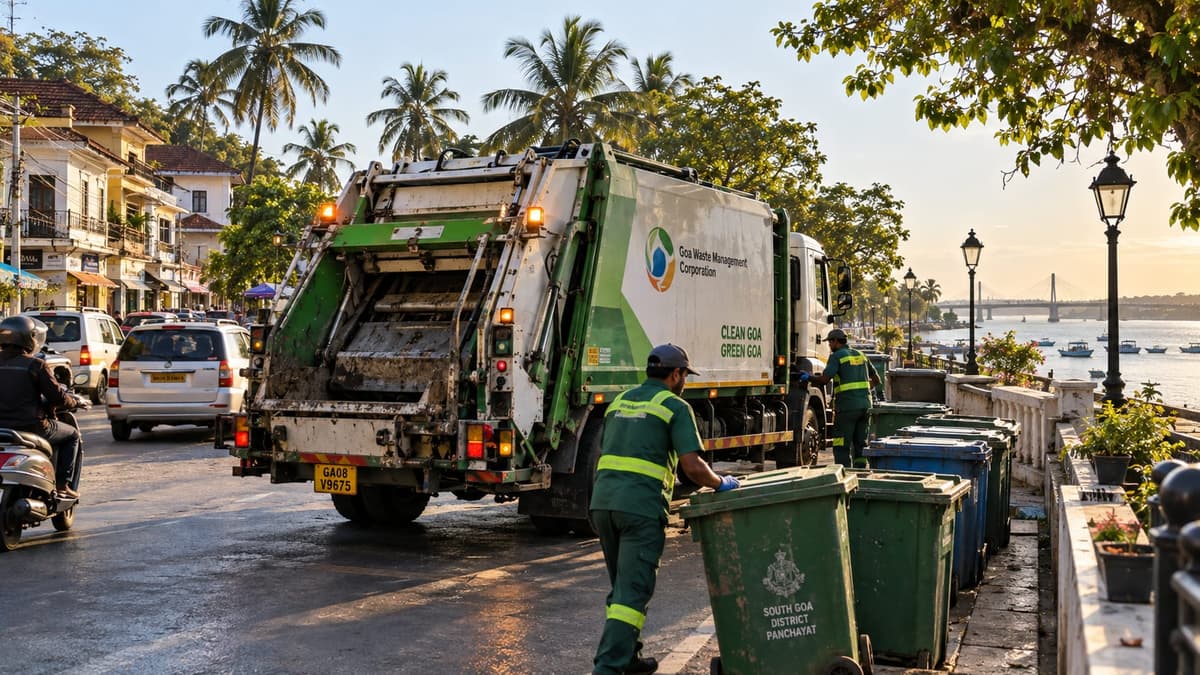
Every day, India moves a staggering amount of waste. Estimates put municipal solid waste generation at roughly 1.5 to 1.7 lakh tonnes per day, and the machinery behind that number is enormous: fleets of tippers and compactors, thousands of collection workers, transfer stations, and processing plants running through every daylight hour. Yet ask most municipal engineers a simple question — where is truck 14 right now, and has ward 7 actually been covered today? — and the honest answer is a phone call, a guess, or a line in a paper register filled in after the fact.
Asset and operations tracking is about closing that gap. It means knowing, in real time, where your vehicles are, whether machinery is running, whether a door-to-door pickup genuinely happened, and where the exceptions are — so decisions are made on what is actually happening on the ground, not on what a register claims happened. This post looks at why the current way of working breaks down, and what changes when operations become visible.
The reality on the ground in Indian waste operations
The Solid Waste Management Rules, 2016 set a clear bar: source segregation, daily door-to-door collection, and scientific processing rather than open dumping. On paper, the coverage numbers look strong — door-to-door collection is reported across the large majority of urban wards. But the gap between "reported" and "verified" is where the real story lives.
Most Urban Local Bodies (ULBs) and panchayats run their operations on a foundation that has barely changed in decades:
- Paper registers and muster rolls for attendance, trips, and pickups, reconciled manually days later.
- Phone calls and WhatsApp as the live control system — a supervisor rings a driver to ask where he is.
- Weighbridge slips and fuel logs that are trusted because there is no independent way to check them.
- Assets — bins, vehicles, machinery — that were procured but are not individually tracked once they are in the field.
This is not a failure of intent. ULBs are chronically short-staffed and stretched on budget; a single sanitary inspector may be responsible for dozens of wards. And a large share of collection and recovery still runs through the informal sector, which sits almost entirely outside any digital record. The result is an operation that is enormous, essential, and largely invisible to the people accountable for it.
Why the current system is flawed
When you cannot see an operation, three predictable problems follow — and every waste manager in India recognises them.
Ghost trips and short trips. A vehicle logs a full round to the processing site but never leaves the depot, or dumps informally halfway and returns. Without an independent trail, a padded trip sheet is indistinguishable from a real one. Fuel, tipping fees, and contractor payments are all made against numbers no one can verify.
Unverified door-to-door pickups. A household or street is marked "collected" whether or not anyone came. Complaints surface days later, by which point there is no way to reconstruct what actually happened. Segregation-at-source — still only partially practised even where it is mandated — is impossible to enforce when the pickup itself is not confirmed.
Untracked assets and slow blind spots. Bins go missing, a compactor sits idle for a week with a mechanical fault, a route is quietly dropped. Because there is no live map and no asset-level history, these losses are discovered late, if at all — usually when a citizen escalates or an audit forces a reconciliation.
Underneath all three is the same root cause: the data is entered by hand, after the event, by the very people whose performance it measures. It arrives too late to act on and is too easy to shade. Supervisors end up managing yesterday's paperwork instead of today's operation.
What real-time tracking actually changes
- One live map instead of a phone tree. Every tracked vehicle and asset shows up in real time, so "where is truck 14" is a glance, not a call.
- Trips that verify themselves. Routes, stops, and site arrivals are reconstructed from the movement itself, so ghost trips and short trips stop being invisible.
- Pickups you can confirm. A QR scan or geo-stamped event ties a collection to a place and a time, turning "marked collected" into "verified collected."
- Assets with a history. Each bin, vehicle, and machine carries its own record — where it is, whether it is working, when it was last serviced — so idle or missing assets surface early.
- Exceptions that come to you. Instead of hunting through registers, supervisors see the missed route or stalled compactor flagged as it happens, and spend their time on the handful of things that are actually going wrong.
Crucially, this is built for the reality described above, not against it. It is designed to lighten the load on thin ULB teams rather than add a data-entry burden, and to produce the audit-ready records that SWM compliance and contractor accountability increasingly demand — without pretending the informal sector or a patchy-network ward does not exist.
| Before | With RwAM |
|---|---|
| Trips confirmed by paper trip sheets | Trips verified from actual vehicle movement |
| Pickups marked done, rarely checked | Pickups confirmed by scan and location |
| Assets untracked once in the field | Every asset carries a live status and history |
| Problems found days later, in an audit | Exceptions flagged in real time |
| Supervisors manage yesterday's registers | Supervisors act on today's operation |
Visibility is not the goal in itself — it is the precondition for everything else: cleaner wards, honest contractor payments, better-utilised machinery, and processing targets that are met because the collection feeding them is real. If your operation still runs on registers and phone calls, that is exactly where we would start. To see how real-time asset and operations tracking would map onto your fleet and wards, book a demo or write to us at director@reclevo.in.
Written by
Reclevo Team
Product